
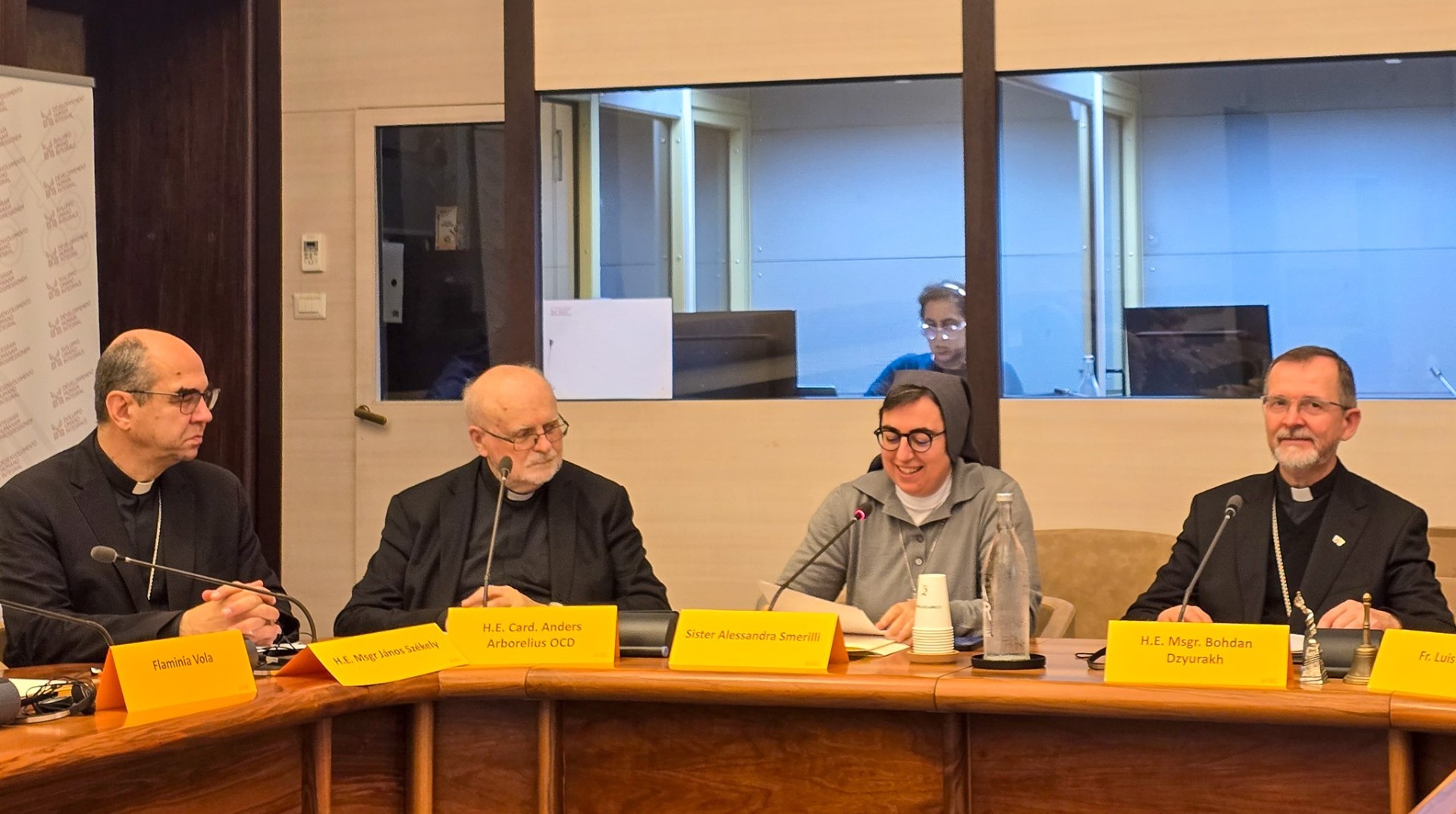
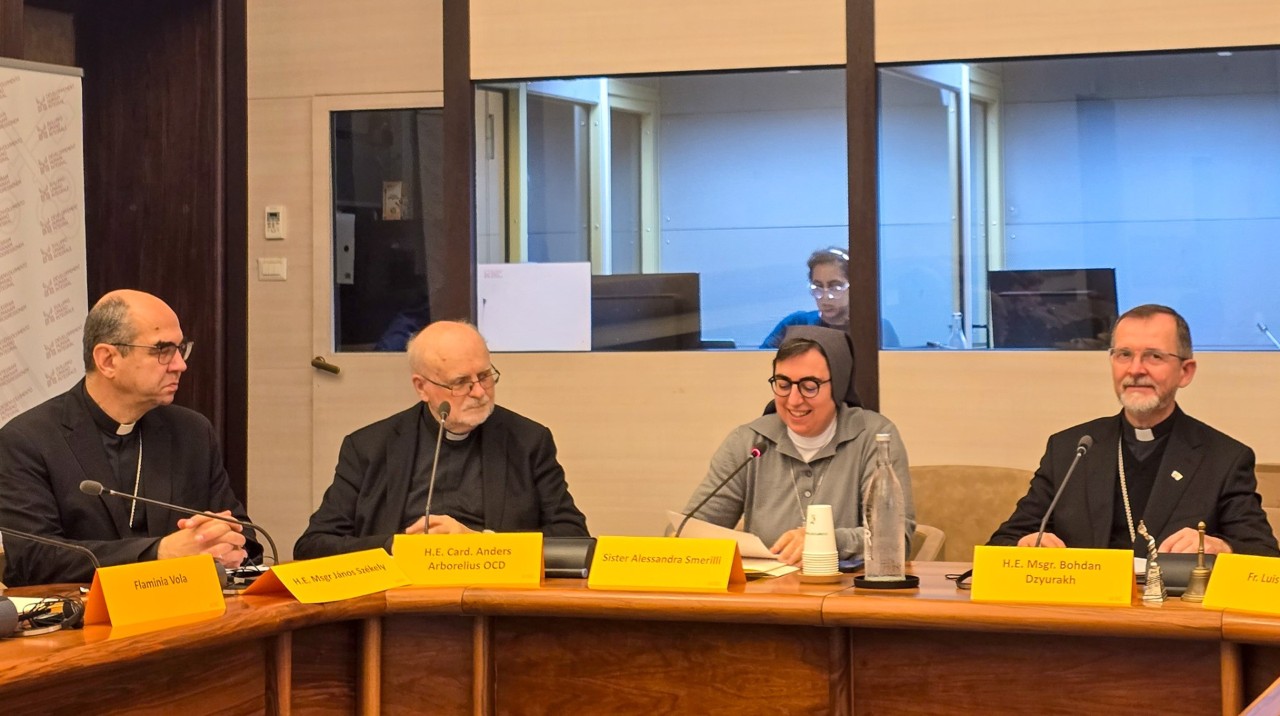
The webinar “Pastoral Care of Roma People in Europe: Experiences, Challenges, Opportunities” took place on Wednesday, November 18, 2026. It was promoted by the Council of Bishops’ Conferences of Europe (CCEE) with the support of the Dicastery for Promoting Integral Human Development (DPIHD), which hosted the meeting.
The proceedings, moderated by Fr. Luis Okulik, Secretary of the CCEE Commission for Social Pastoral Care, opened with a greeting from Sr. Alessandra Smerilli, FMA, Prefect of DPIHD. She recalled that, during the 2025 Jubilee of Roma, Sinti and Travellers, Pope Leo XIV had addressed them, saying that “hope is on the move.” Sr. Smerilli shared three brief thoughts: walking together, because no one can promote integral human development alone; the responsibility of dioceses, where “a Roma family discovers whether the Church is a home, or a closed door”; and sharing, because good practices “are not recipes to copy. They are more like seeds. They need new soil, and patience.” The Prefect concluded by affirming that pastoral care of Roma people “is not something we do for them. It is something we do with them.” These communities bring “a faith that endures hardship, a strong sense of family, and a hospitality that many of us risk forgetting.”
The participants also received greetings from H.E. Msgr. Bohdan Dzyurakh, President of the CCEE Commission for Social Pastoral Care, and Cardinal Anders Arborelius, OCD, Head of the Migration Section.
Dr. Cristina Simonelli, President of the Comité Catholique International pour les Tsiganes, recalled that “Roma” is a term that brings together, without making uniform, different groups such as Sinti, Kalé/Gitanos, and Travellers. She then outlined three balances needed for good pastoral care: a balance between distinctive features (language, rituals, popular piety) and sharing, so that specificity does not become a ghetto; between countering injustice and listening to others’ ways of life; and between “cultural” vigilance and participation capable of “mediating”. She concluded by saying that the presence of the Roma “is not a problem, but a resource.”
Three good practices from Spain, Ireland, and Hungary were then presented. For Spain, Ms. Rosalina Vicente Giménez presented the Gypsy pastoral ministry and stressed the importance of having a point of reference in the parish, knowledge of the territory, networking, and planning with precise objectives. For Ireland, Fr. Paul O’Driscoll described the culture of the Irish Travellers, a group distinct from the Roma and recognized as an ethnic group by the State, also highlighting some difficulties such as discrimination. He encouraged people to learn more, counter prejudice, and promote inclusion. Finally, for Hungary, Sr. Judit Szerző of the Little Sisters of St. Francis presented the network of various Church initiatives working alongside poor children and young people, particularly Roma, with study centers, “Open Houses,” and student residences. Pastoral care, she explained, is inspired by the Good Shepherd in order to bring the good news, which is above all hearing the words “you are not alone.”
The conclusions were entrusted to H.E. Msgr. János Székely, Head of the Section for Social Issues of the CCEE Commission for Social Pastoral Care, who offered a greeting in Romanes to underscore the importance of Roma identity. Thanking DPIHD and all the participants, he declared that every community must have a place for everyone. The presence of the Roma, he said, is not a problem; the Roma have many treasures: love of family, a very rich emotional life, talent for the arts, and a natural closeness to God. Their talents are to be discovered and shared with all of society. He stressed that help for their integral human development rests on three pillars: schooling, work, and faith.
The webinar confirmed the Church’s attention in Europe toward communities often marked by marginalization and discrimination. The value of sharing and networking lays the foundations for an ever more inclusive future.