
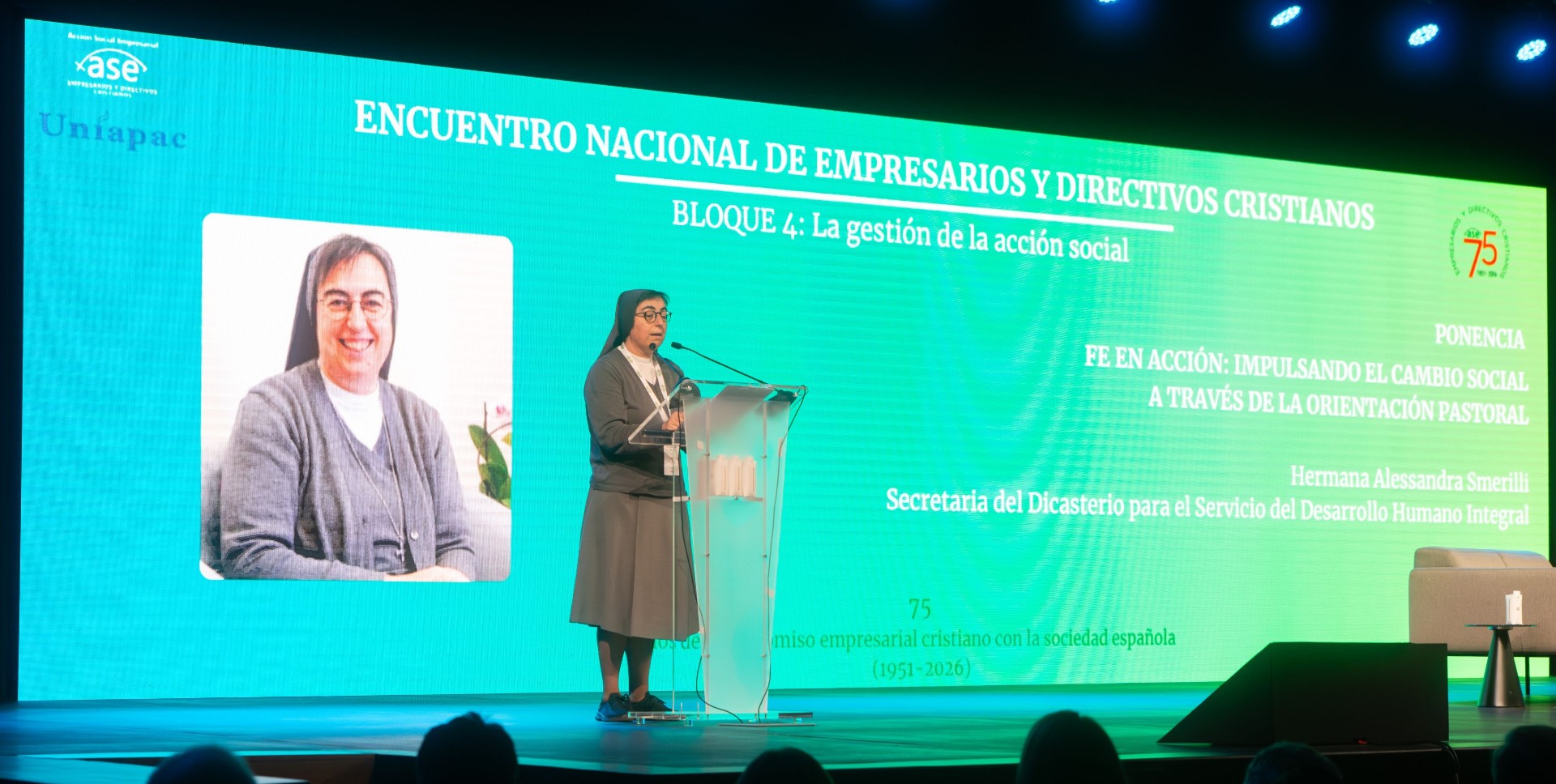
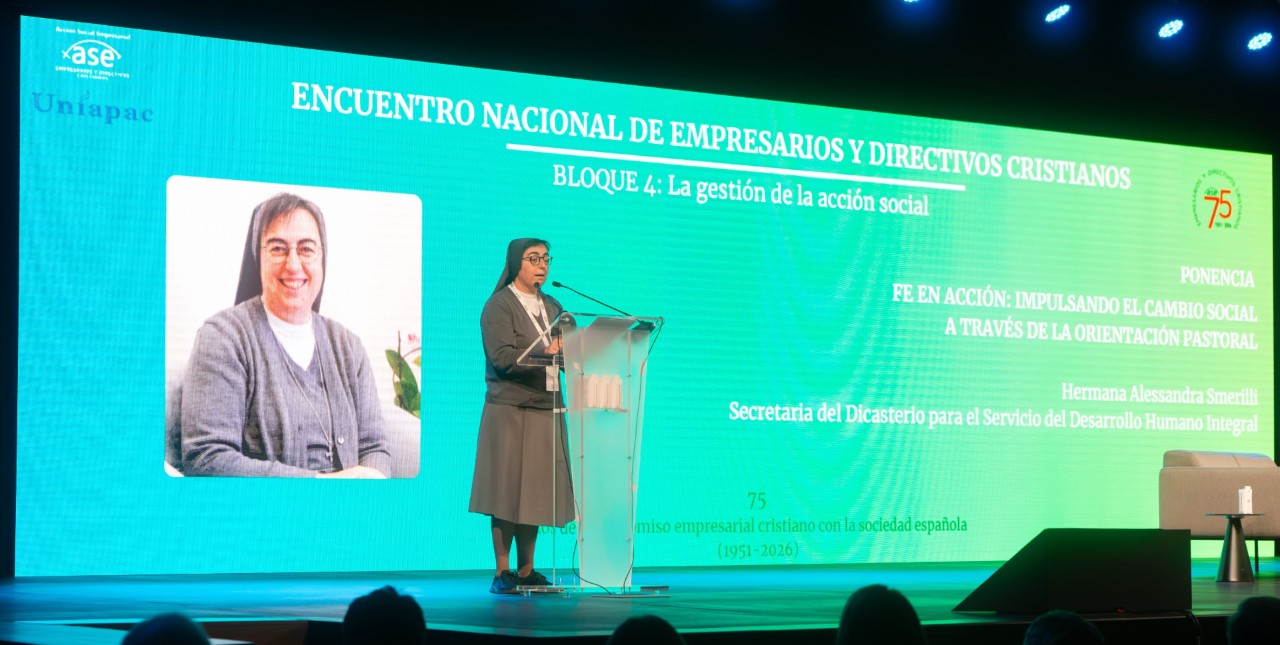
A mission to Spain took Sr. Alessandra Smerilli, F.M.A., Secretary of the Dicastery for Promoting Integral Human Development (DPIHD), to the cities of Madrid and Bilbao. Her first stop was the National Gathering of Christian Entrepreneurs and Executives, held in Madrid from May 7 to 9 to mark the 75th anniversary of Acción Social Empresarial (ASE).
During this visit, Sr. Smerilli presented the mission of the DPIHD and offered participants a talk focused on “Faith in Action”. Driving social change through pastoral guidance”. A speech rooted in faith, with incisive words inviting today’s society to use a language of love, capable of radiating closeness and fraternity. This is, in fact, a feature of the Church, which seeks to engage with current anthropological and social challenges.
In her speech, Sister Alessandra emphasized with great conviction that, especially in times of crisis, “we must rediscover with conviction that the awareness of the power of acting together, rooted in shared values, is one of our greatest strengths.” She continues, explaining how, from this perspective, the economy is a true “living ecosystem of human relationships.” Moreover, she emphasizes that Faith in Action is a call to rediscover the true essence of management and to understand that playing a pastoral role in the business world means shifting from managing human resources to caring for people, who are the most precious capital. She concluded her speech by praising Christian leaders, recognizing them as “the hands of the Church in the marketplace”, and inviting them to lead with a pastoral heart: “Bear witness to the Kingdom of God and help unleash the potential of women and men so that they may fully flourish.”
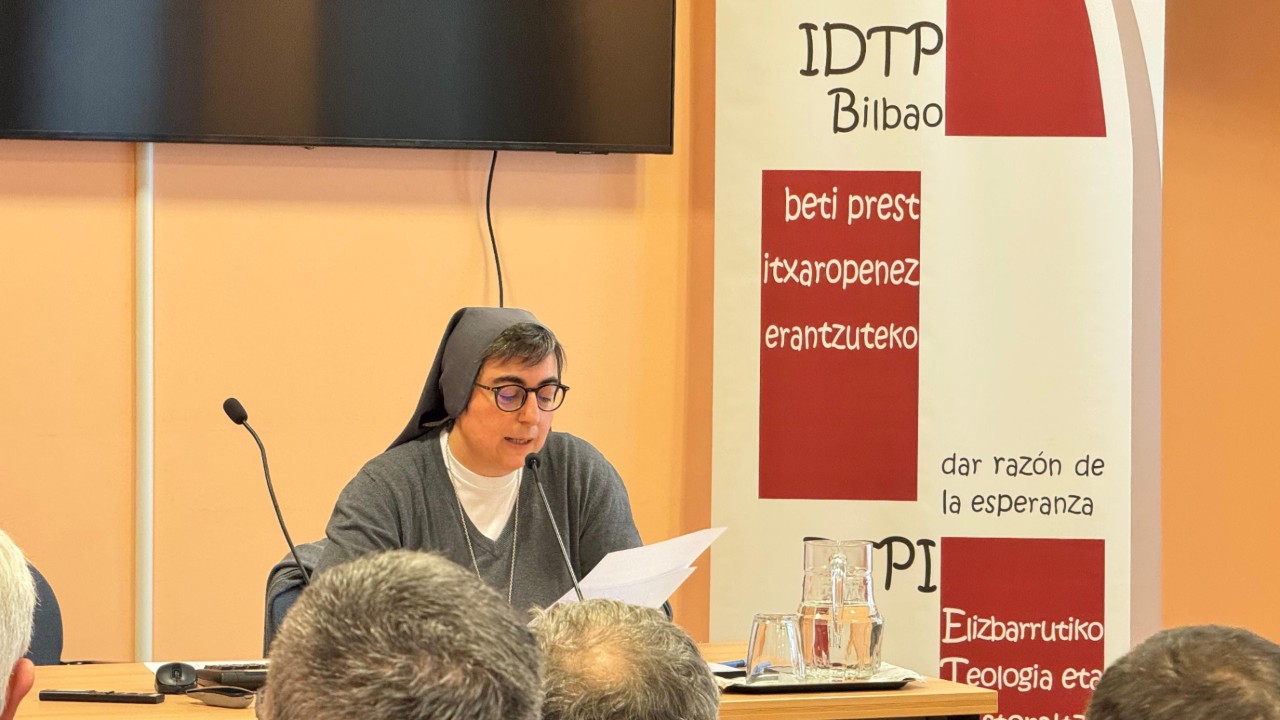
On May 11, Sr. Alessandra Smerilli continued her trip to Bilbao. In the morning, after a talk with the Bishop, attended a meeting with pastoral workers of the Diocesan Institute of Theology and the Pastoral Ministry of the Diocese of Bilbao, dialoguing on “integral ecology and social innovation in the light of the Encyclical Laudato si'”. Sr. Alessandra Smerilli explained that Pope Francis’s document is based on a simple but effective observation: “Environmental degradation and human exclusion share a common root: a model of development that prioritizes profit, reduces life to mere technology, and ignores human dignity.” During the meeting, she therefore affirmed that integral ecology is the theological-ethical horizon and that social innovation must serve as a tool to eliminate environmental and human injustice.
In the afternoon, the Secretary met with students from the University of Deusto and several Catholic entrepreneurs. In this context, she spoke of the economy as a path to healing, justice, and collective well-being, and outlined the mission of the Dicastery, which assists the universal Church in achieving the goals of sustainable human development for every individual. This “enables people to fully exercise their inherent dignity.”
She went on to say that the economic life of a community can also be lived with an attitude of care, through choices and initiatives aimed at inclusion and the promotion of every person, thus avoiding the marginalization of the most vulnerable. The same applies in the workplace, where recognizing the professional value of each collaborator ensures respect for the dignity of workers.
Speaking about the economy as a tool and path toward justice, Sr. Smerilli mentioned Pope Leo XIV, recalling that he himself has become an ambassador for this issue through the Apostolic Exhortation Dilexi te, in which he invites everyone to listen to the cry of the poor and not remain indifferent to their suffering.
Sr. Alessandra also recalled that “today we are required to to a true economic conversion, which concerns not only structures or systems, but first and foremost consciences. The future of humanity depends on daily choices, on entrepreneurial, financial, and institutional decisions, and on the way, we conceive work, profit, and social responsibility.”