
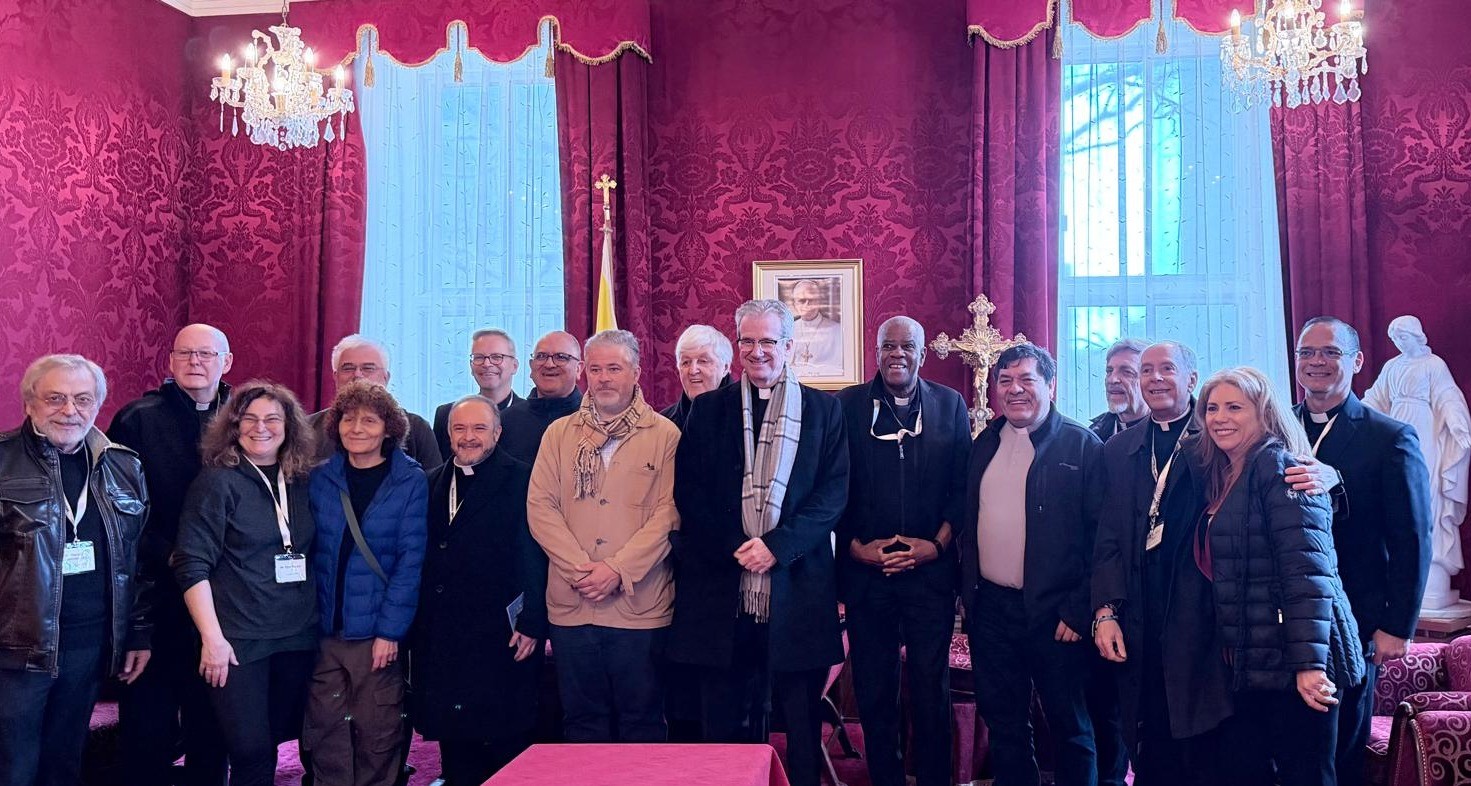
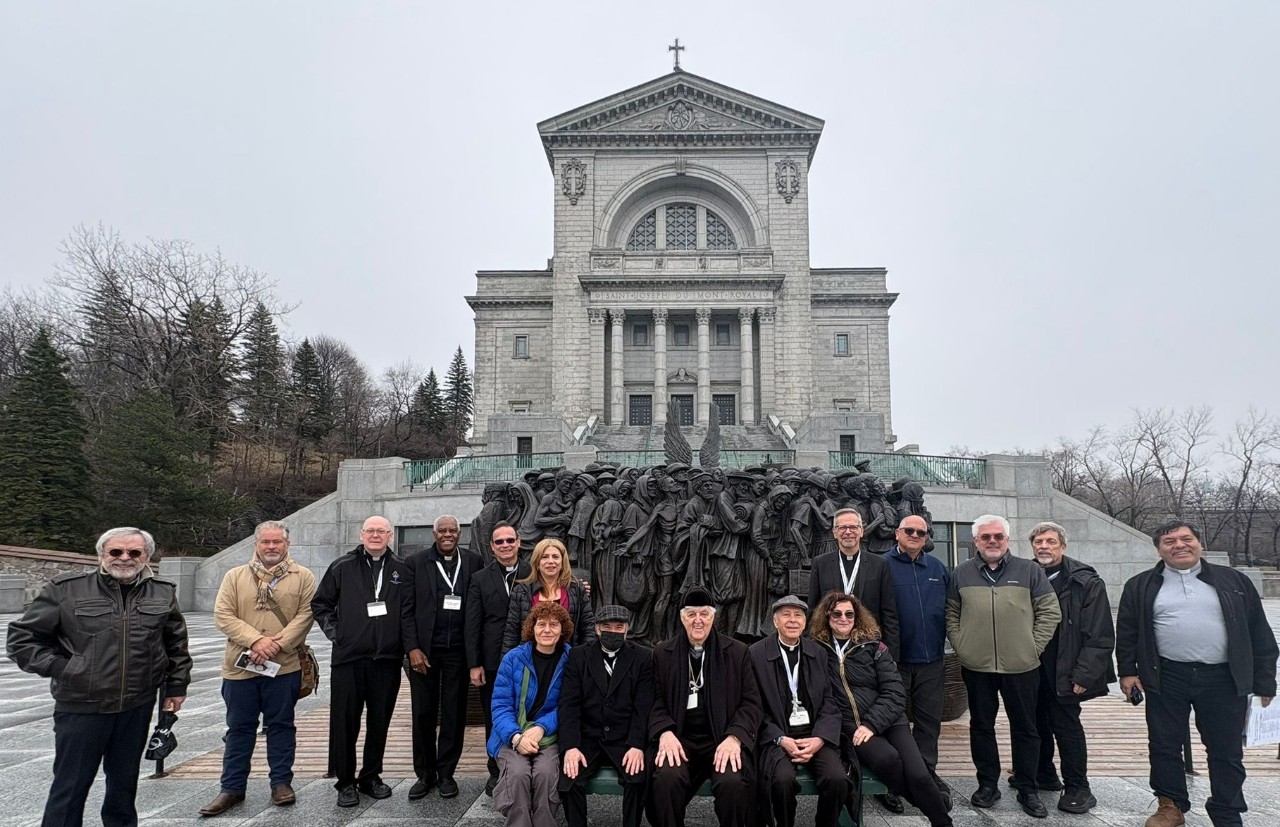
The Archdiocese of Montreal hosted a meeting on human mobility pastoral care, attended by bishops from Canada, the United States, and Mexico, as well as representatives from the Observatorio de Movilidad Humana y Pastoral de Centroamérica, México y el Caribe (OSMECA), a group dedicated to human mobility ministry.
The gathering, which took place from April 13 to 16, 2026, focused on listening and dialogue regarding the pastoral letter “He Saw Them, He Drew Near to Them, and He Cared for Them.”
This regional meeting of Church leaders responsible for human mobility pastoral care sought to strengthen the Church’s accompaniment of migrants and refugees and to create a more effective regional collaboration between the Church in Mexico, Canada, and the United States, looking to identify concrete ways that the Catholic Church can better accompany vulnerable people on the move today.
This pastoral initiative was organized by the Office for Cultural and Ritual Communities of the Archdiocese of Montreal, led by the Episcopal Vicar, Fr. Pierangelo Paternieri, CS, assisted by Alessandra Santopadre and Eliana Jaramillo. For its part, the Dicastery for Promoting Integral Human Development (DPIHD) was represented by Cardinal Fabio Baggio, CS, Undersecretary of the Dicastery, DPIHD officials Fr. Robert Stark and Ms. Elisa Batazzi, as well as two Members of the DPIHD, Fr. Gustavo Meneses (OSMECA) and Mr. Dylan Corbett (Hope Border Institute).
The bishops from the region who participated in the meeting were: Bishop Pierre Goudreault, Bishop of Sainte-Anne-de-la-Pocatière and President of the Canadian Conference of Catholic Bishops; Bishop Martin Laliberté PME, Bishop of Trois-Rivières; Bishop Noël Simard, Bishop Emeritus of Valleyfield; Bishop Brendan Cahill, Bishop of Victoria, Texas, and Chair of the Committee on Migration of the United States Conference of Catholic Bishops (USCCB); Bishop Mark J. Seitz, Bishop of the Diocese of El Paso, Texas, and member of the Committee on Migration of the USCCB; Bishop Jacques Fabre-Jeune, Bishop of Charleston and consultant to the Committee on Migration of the USCCB; Bishop Eugenio Lira Rugarcía, Bishop of Matamoros-Reynosa and head of the Dimensión Episcopal de Pastoral de Movilidad Humana of the Mexican Episcopal Conference; and Bishop Daniel Blanco, President of OSMECA.
Also Bishop Christian Lépine, Archbishop of Montreal, and Bishop Alain Faubert, Bishop of Valleyfield (Quebec), were able to participate is some of the liturgies and cultural events.
Besides reflecting on the pastoral letter “He Saw Them, He Drew Near to Them, and He Cared for Them,” participants gained firsthand experience of the pastoral ministry for human mobility in the province of Quebec by meeting, speaking with, and celebrating the Eucharist with various local migrant communities, including those of Italian, Eritrean, Vietnamese, and Latin American origin. They also had the opportunity to dialogue with seasonal farm workers and visit the “Le Pont” center, which provides housing and support to asylum seekers and migrants with a vulnerable immigration status.
Moreover, the participants met with the Réseau d'aide aux travailleuses et travailleurs migrants agricoles du Québec (RATTMAQ), a group who advocates for the rights of migrant agricultural workers, and the Centro de ayuda a familias latinoamericanas (CAFLA), who coordinates various social services.
Concluding Remarks from the Meeting
At the conclusion of the meeting, those present reaffirmed their commitment to walk together as the Church, responding with an evangelical, prophetic, and supportive spirit to the challenge of human mobility in our time.
“We deeply value the pastoral experiences we have encountered. These initiatives constitute a treasure of knowledge and practices that must be strengthened, made visible, and shared, as they can inspire and be replicated in other ecclesial contexts,” they stated.
In the same way, they highlighted the importance of intercultural pastoral care, which is “a concrete example of comprehensive care for migrants in host communities”; they emphasized the “ability to develop networking with civil society organizations”; and they recognized the pastoral accompaniment needed for asylum seekers, seasonal workers, and survivors of human trafficking.
Finally, the participants highlighted the “Le Pont” initiative, describing it as “a significant model for implementing the pastoral approach summarized in the four fundamental actions: welcome, protect, promote, and integrate,” and concluded that “this approach offers concrete and fruitful guidance for pastoral work in the field of human mobility.”


