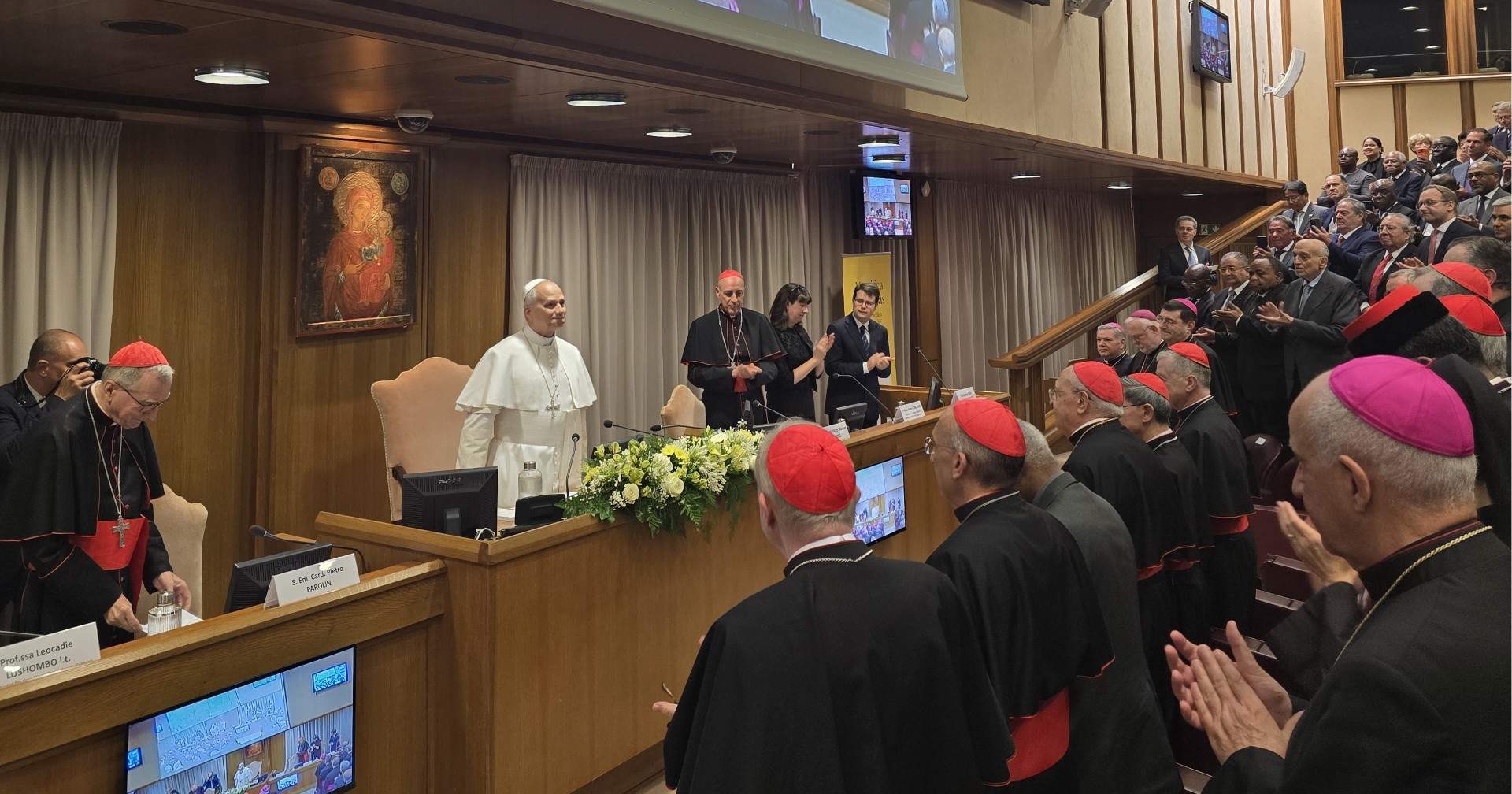
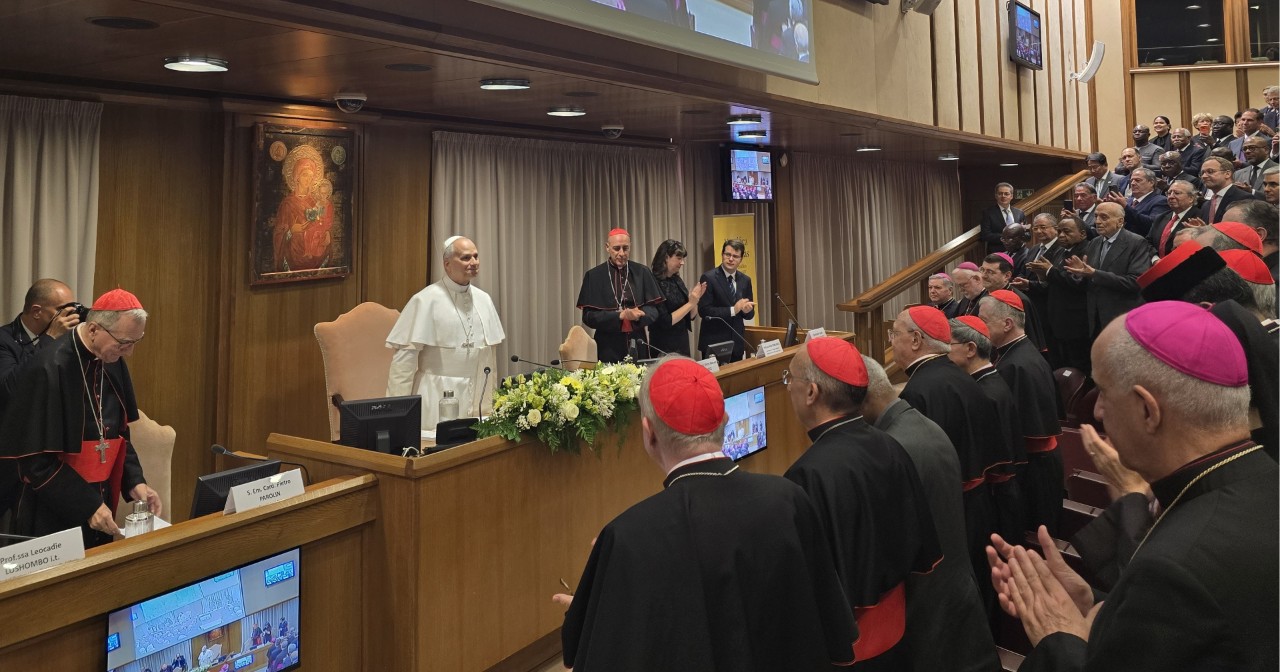
The Letter was presented by Cardinal Víctor Manuel Fernández, Prefect of the Dicastery for the Doctrine of the Faith, and Cardinal Michael Czerny, Prefect of the Dicastery for Promoting Integral Human Development (DPIHD). The distinguished moderator was Cardinal Pietro Parolin, Secretary of State, who, in his opening address, emphasised that the initiative bears witness to a Church eager to engage in dialogue on the transformations brought about by new technologies, listening to those who “are directly involved in this transformation” and contributing “the heritage of wisdom entrusted to it in the light of Revelation in Christ”.
Cardinal Fernández focused on the passages of the encyclical that he himself described as “the most theological”. In particular, he highlighted the contrast between progress—which places total trust in technological capabilities—and “a life lived in faith, hope and charity”. To the most common interpretation of progress as the overcoming of human limitations, the encyclical sets forth a vision in which limitation is not a defect to be eliminated, but a constitutive dimension of the person. However, the Prefect recalls, the Holy Father “insists on showing how this call to transcend ourselves towards another level of humanity—the one dreamed of by God—resonates within Christianity as well”. Here is the full text
Next to speak was Professor Anna Rowlands, a political theologian, who focused specifically on the Church’s social doctrine and the theological ethics of human migration, offering a comprehensive analysis of all the main themes of the encyclical. The key to understanding remains the Christian social tradition, of which, according to Professor Rowlands, Magnifica Humanitas offers a new synthesis: “The Church’s social doctrine invites us into a wide communal space of encounter and mutual accompaniment, sharing in a collective search for truth, justice and flourishing.” Read the full speech
Christopher Olah, co-founder of Anthropic, an AI company, and a leading researcher in the field of AI interpretability, then took the floor. Speaking candidly, the scientist highlighted several challenges posed by artificial intelligence and acknowledged that, for this technology to move in the right direction, there needs to be constant dialogue and collaboration between those working within AI systems and “people who care about things going well, who are paying close attention, who are willing to say hard things, who are willing to be our earnest, thoughtful, critics.” For the full speech
Following him, Professor Leocadie Lushombo i.t., who holds a doctorate in theology and is a professor of Theological Ethics at the Jesuit School of Theology, Santa Clara University, California, drew attention to the most vulnerable peoples and communities and to the Holy Father’s warnings regarding the effects of artificial intelligence on conscience and the urgency of safeguarding the truth, protecting vulnerable workers and assuming a shared moral responsibility. “One way the Church and society in the global south could leverage this technology for good,” explained the theologian, “is by giving people a voice in ways we haven’t before. It is time to make good use of the local means that preserve the culture of encounters.” Here is the full speech
If AI is the fruit of our ingenuity and a testament to human greatness, Cardinal Czerny explained, it presents us with a series of challenges. “The future of artificial intelligence,” said the Prefect of the DPIHD, “is a building site. [...] The direction that AI takes is not written into the technology itself. It depends on our choices.” It is therefore necessary to act in accordance with our conscience, that is, “that innermost part of the person where the human being is touched by the voice of God”, and to care for our future, as we do for our Common Home. Read the full speech
In conclusion, Cardinal Parolin reiterated that the future of technology lies in human responsibility. The encyclical calls on us, in fact, to “form consciences capable of living in the age of artificial intelligence without losing our freedom, of using powerful tools without allowing ourselves to be dominated by them, of remaining human in an environment increasingly shaped by automated logic”.
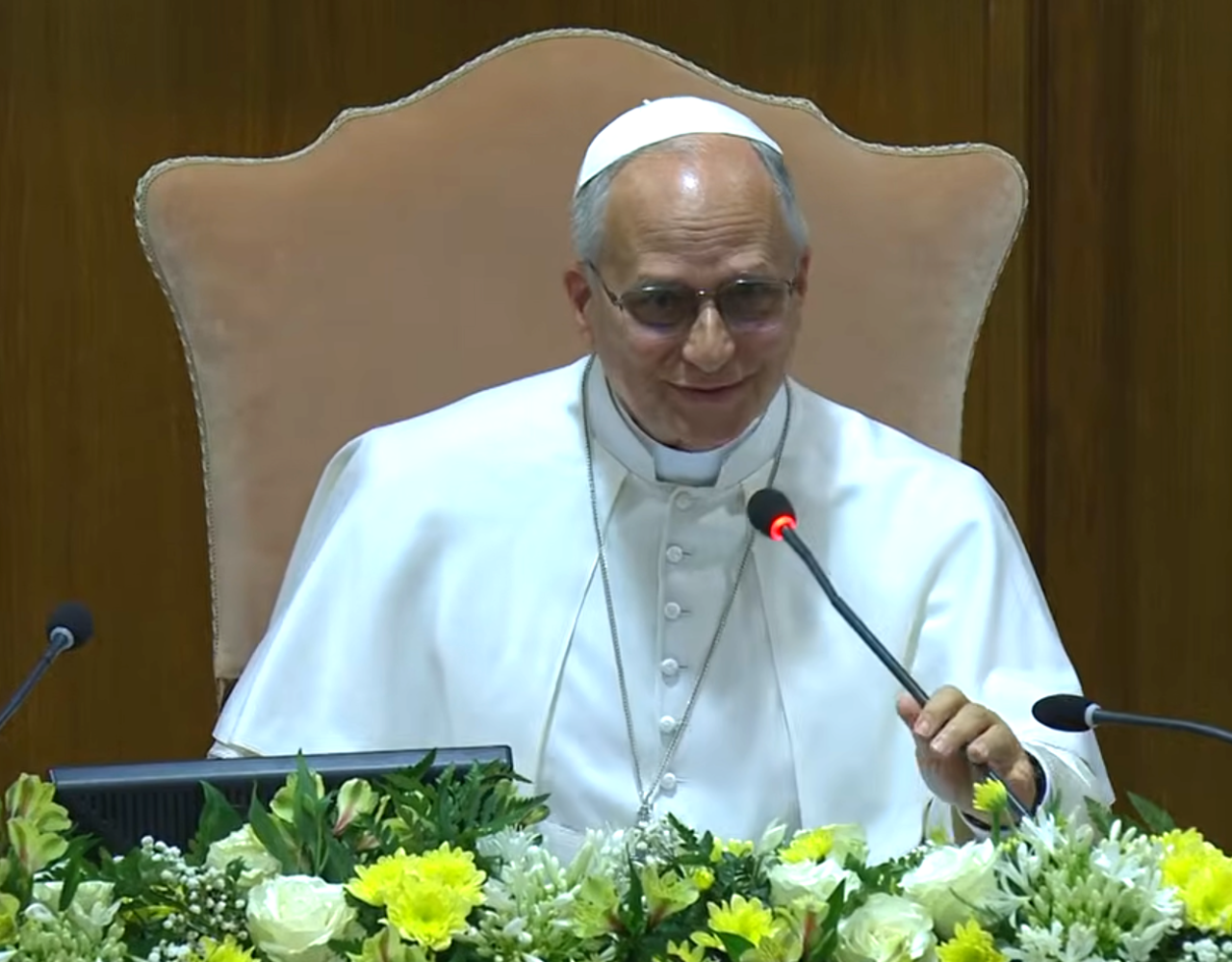
Following the speakers’ remarks, the Holy Father took the floor. With conviction, Leo affirmed that “artificial intelligence now demands to be ‘disarmed’, freed from logics that turn it into an instrument of domination, exclusion and death.”
But for AI to be directed towards the common good, we must also build. The Church, which has always been “called to decipher the ‘new things’ in the light of the Gospel and the dignity of the human being”, and its Shepherd wish—as the Pope explained—to offer their contribution: “We do not possess technical answers, nor do we seek to displace those with expertise. But we bring a wisdom concerning the human that our present time desperately needs.” Read the Holy Father’s address here
The event was also streamed online.
Watch the live stream