
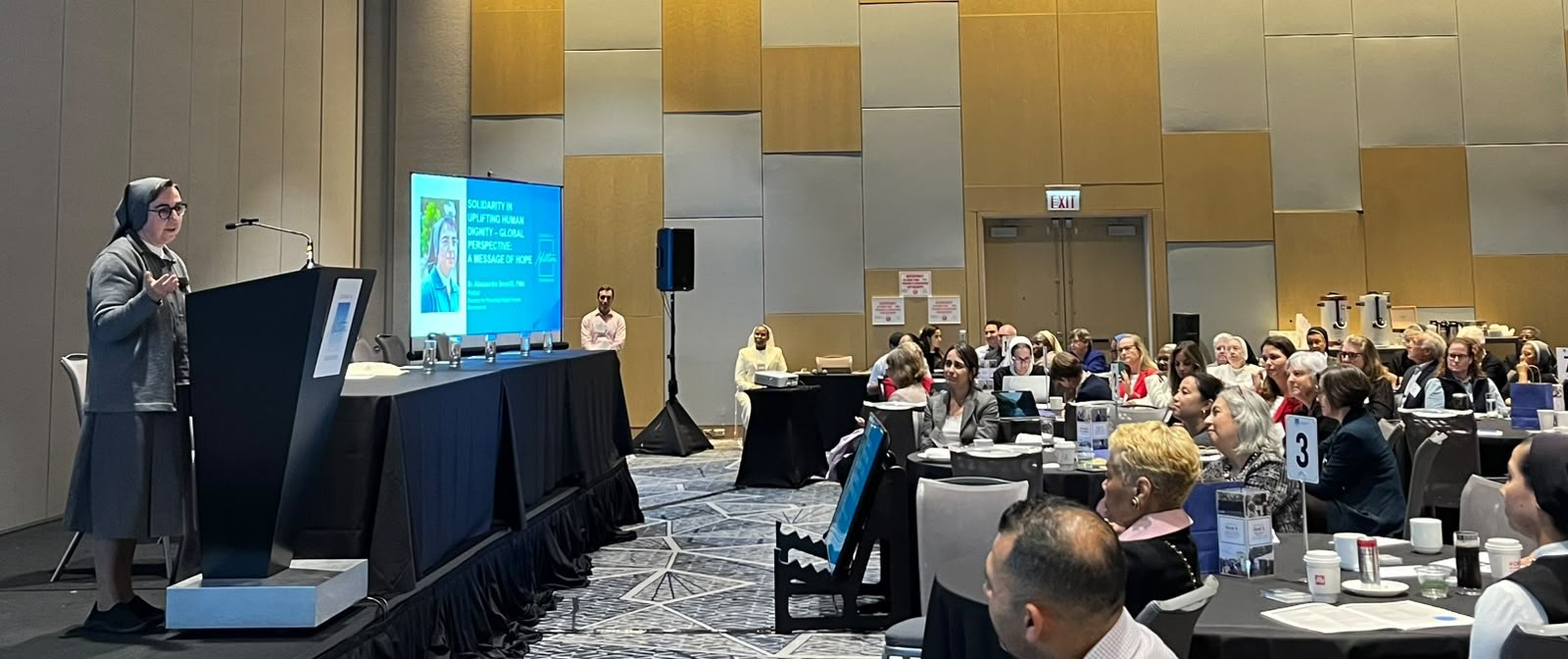
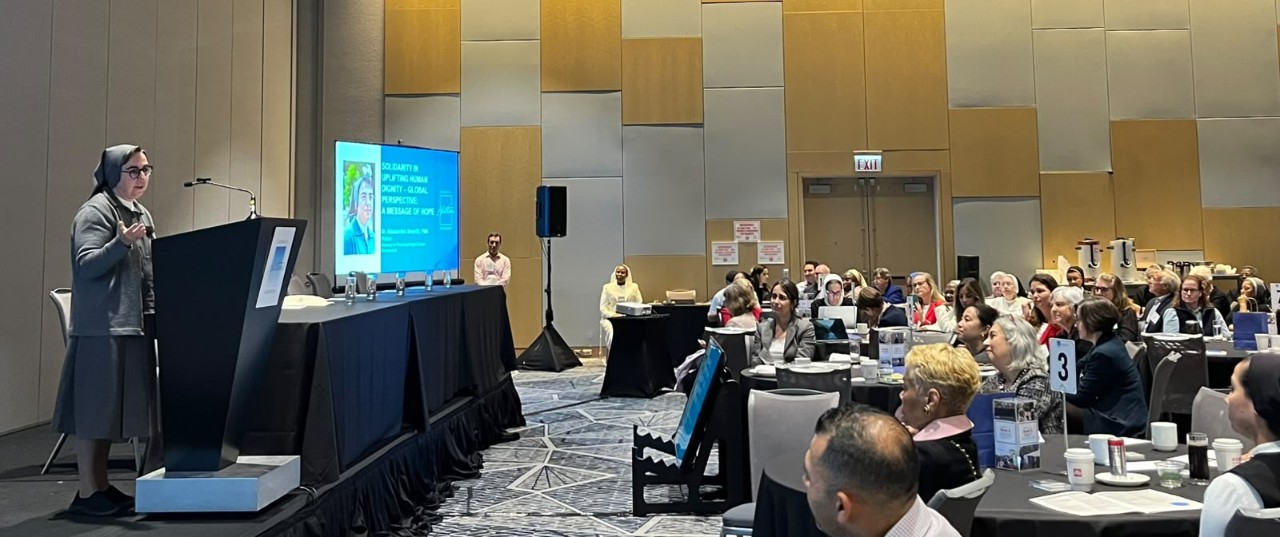
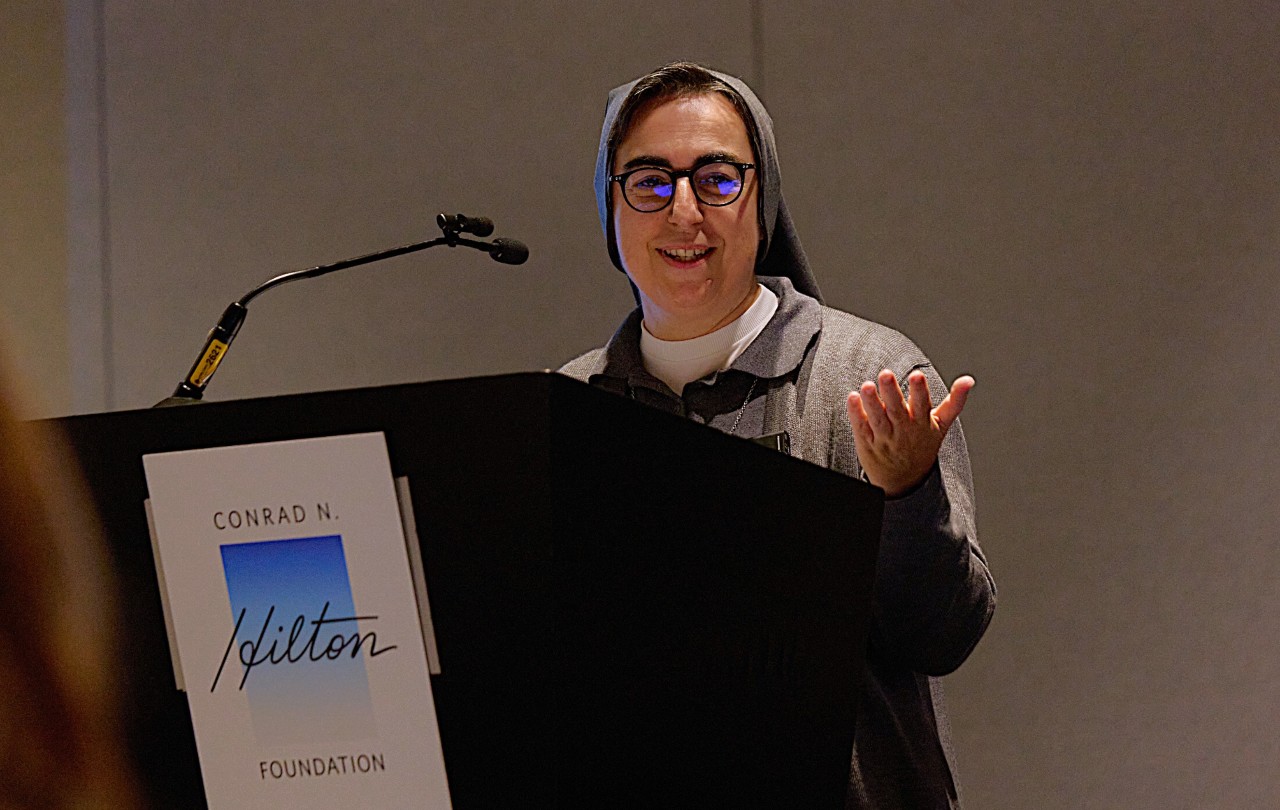
Sister Alessandra Smerilli, FMA, Prefect of the Dicastery for Promoting Integral Human Development, took part last October 15 in Chicago (USA) in the Catholic Sisters Initiative Convening, promoted by the Conrad N. Hilton Foundation. The meeting brought together representatives of various religious congregations and of U.S. organizations led by women religious and supported by the Catholic Sisters Initiative. The Prefect delivered an address on the theme “Solidarity in Promoting Human Dignity – A Global Perspective: A Message of Hope,” offering a reflection on the challenges of the digital revolution in light of the protection of the dignity of the person and of integral human development.
Sister Smerilli invited the sisters to be protagonists of technological transformations, safeguarding human dignity and strengthening networks of solidarity and hope. In her reflection, she recalled the need to pay attention to, and care for, the most vulnerable people, who are often invisible to digital systems. “In development work,” she stressed, “we speak of ‘the last mile’: the people hardest to reach. And the last mile is not only far away. It is also here, in rich cities, among people without papers, without a connection, without a stable address.”
A technology that leaves no one behind
Drawing on Pope Leo XIV’s Encyclical Magnifica Humanitas, Sister Smerilli invited the participants to reflect on the challenges of artificial intelligence in light of human dignity. “Who is counted? What happens to the whole person? And who decides, and who gains?” she asked. Highlighting the risks of digital exclusion, especially for the most vulnerable populations, she reaffirmed: “The question is not yes or no to AI. The question is what we are building with it, and who gets to build.”
The irreplaceable contribution of women religious
The Prefect emphasized the fundamental contribution of women’s religious congregations to the promotion of integral human development, particularly through their presence alongside the most vulnerable. In the face of the challenges posed by artificial intelligence, she underscored the irreplaceable value of this closeness and of their knowledge of human realities, which cannot be reduced to data. “A model sees a profile. You see a face,” she said, reaffirming the importance of care, of protecting the most vulnerable, and of networks of solidarity.
From reflection to concrete choices
Sister Alessandra Smerilli invited religious communities to undertake a shared discernment before adopting new technological tools, asking themselves who is excluded from the data, whether automated decisions can be contested, and whether these technologies can truly free up time to devote to care and human relationships.
From this perspective, innovation must support human work without replacing personal responsibility or weakening bonds of solidarity. “Use AI to cut the paperwork, never to cut the relationship” was one of the main appeals addressed to the participants.
Weavers of hope
In concluding her address, Sister Alessandra invited the sisters to be “weavers of hope,” recalling the capacity of women’s congregations to respond to the challenges of every age.
“Many congregations of women were born in the nineteenth century to heal the wounds of the first industrial revolution, the ‘new things’ of Rerum Novarum. My own congregation, the Daughters of Mary Help of Christians, was founded in 1872 for poor girls. Sisters were among the first to answer the new things of that time. We are not starting from zero.”
And she concluded: “Dear sisters, the data arrived late at the last mile. You were already there.”
That evening, Sister Alessandra Smerilli received the Servant Leadership in Catholic Social Doctrine Award, conferred in recognition of her service-inspired leadership and her significant contribution to the reflection on and dissemination of the principles of the Church’s Social Doctrine.
Jessica Baroni and Martina Maini, Officials of the Dicastery for Promoting Integral Human Development, also took part in the meeting.


