


Mental health and pastoral accompaniment in humanitarian contexts:
a Study Day at the Dicastery

A joint document has been published

Mental health and pastoral accompaniment in humanitarian contexts: <br>a Study Day at the Dicastery

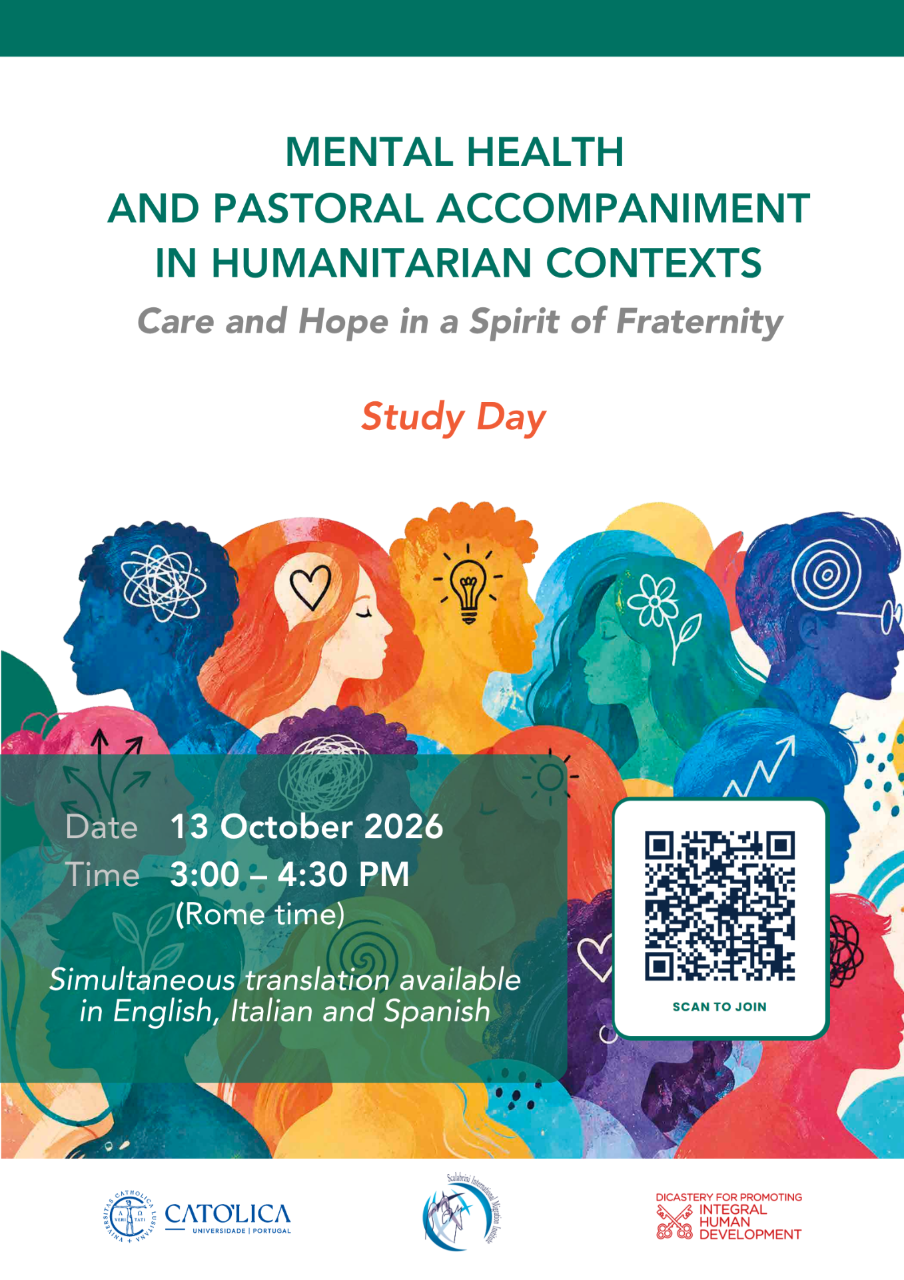
On Tuesday, October 13, from 3:00 to 4:30 p.m., the Study Day "Mental Health and Pastoral Accompaniment in humanitarian contexts" took place in the Van Thuan Hall of the Dicastery for Promoting Integral Human Development. The hybrid meeting was sponsored by the Católica University Portugal (UCP) and the Scalabrini International Migration Institute (SIMI), in collaboration with the Dicastery for Promoting Integral Human Development.

The initiative responded to a critical issue affecting many local Churches today: In contexts marked by humanitarian crises, people and communities often face conflict, displacement, loss, prolonged uncertainty and the disruption of relationships and everyday life, with profound consequences for mental health and well-being. Local Churches accompany people through these same realities every day, and these concerns are increasingly encountered within pastoral life itself. 

In response, beginning in 2024, the Dicastery initiated a process of dialogue and reflection with Catholic organizations, religious congregations and international experts, bringing together field experience that was reviewed by a group of experts under the patronage of UCP and SIMI and consolidated into a document that was shared with participants and made public after the event.

The Study Day brought into dialogue lived humanitarian realities, the Church’s pastoral experience, Christian anthropology and spirituality, and relevant mental-health knowledge. It also contributed to a broader process addressing three interconnected areas: the relationship between pastoral care and mental health; the possibilities for implementing the document in pastoral accompaniment; and the tools to be developed to support pastoral workers.

Among the speakers were Dr. Peter Hanenberg, Vice-Rector of the Católica University of Portugal; Msgr. Jozef Barlaš, Secretary of the Dicastery for Promoting Integral Human Development; Archbishop Joseph Tobji, Maronite Archeparchy of Aleppo (Syria), who drew on his pastoral experience to reflect on what it means for the Church to accompany people and communities through years of conflict and suffering. Dr. Márcio Gagliato, a Global Mental Health and Humanitarian Specialist, introduced the final document, briefly situating the process through which it was developed and the reflection it sought to foster around mental health and pastoral accompaniment.

In the space dedicated to reflections, Fr. Aldo Skoda, C.S., Scalabrini International Migration Institute - Pontifical Urbaniana University; Pascale Debbane, official of the Dicastery; and Joseph Kelly (CR4E, Catholic Response for Emergencies) brought complementary perspectives into dialogue, reflecting on what humanitarian realities reveal about mental health and human suffering, and what they call for in pastoral accompaniment.

The event was held in English and Italian. Online participation was available via Zoom, with simultaneous interpretation into Italian, Spanish and English.

29 September 2026