The Catholic Church in Europe has strengthened its commitment to migrants, seeking structural solutions and promoting integral human development. The fifth edition of the Report on the Pastoral Care of Migrants by the Dicastery for Promoting Integral Human Development, produced in collaboration with the Catholic University of the Sacred Heart in Milan, presents forty good practices adopted in various countries to guarantee fundamental rights such as education, decent housing and dignified work. Four of these are presented below.
Lampedusa: solidarity in the face of suffering
A gateway to Europe for migrants from Africa and Asia, the island of Lampedusa, in Sicily, lies just 100 nautical miles from the African continent. In September 2025, it welcomed the first religious community of the International Union of Superiors General (UISG), which came to accompany closely the situation of migrants and refugees, in response to an appeal made by Pope Francis in 2015.
In this project, which brings together sisters of different nationalities, communication takes place in English, French and Italian. In this context, some changes in the style of consecrated life represent a challenge and require adaptation. “The practice of synodality on site does without a formally appointed superior, encouraging the group to make decisions together—a demanding process, but enriching for human and spiritual growth,” says Sister Antonietta.
The sisters collaborate with the Coast Guard, the Carabinieri, the police and the Red Cross in rescue and reception operations for migrants in Lampedusa, seeking to act as a bridge between migrants and local citizens. They face dramatic situations—tortured people, cases of hypothermia, lifeless bodies—and continue their mission relying solely on the grace of God.
London: over 160 years of migrant ministry begun by Saint Vincent Pallotti
Founded on April 15, 1863 by Saint Vincent Pallotti, the Catholic community in London has been working for more than 160 years in welcoming Italian immigrants. “The parish was born in a period of tension between Anglicans and Catholics and was a pioneer of migrant ministry in Europe. Today the community is still very active, with Masses, baptisms, weddings and funerals, and it promotes social gatherings in a spirit of fraternity and coexistence,” explains Pallottine priest Father Andrea Fulco.
Among the parish’s social initiatives is the Saint Peter Project, which supports Italians in vulnerable situations, including the homeless, people with addictions, former prisoners and those facing economic or psychological hardship. Father Andrea, who also collaborates with prison ministry, notes that the presence of Italians in local prisons has decreased after Brexit—an event that, in his opinion, has worsened the social and financial problems faced by many migrants.
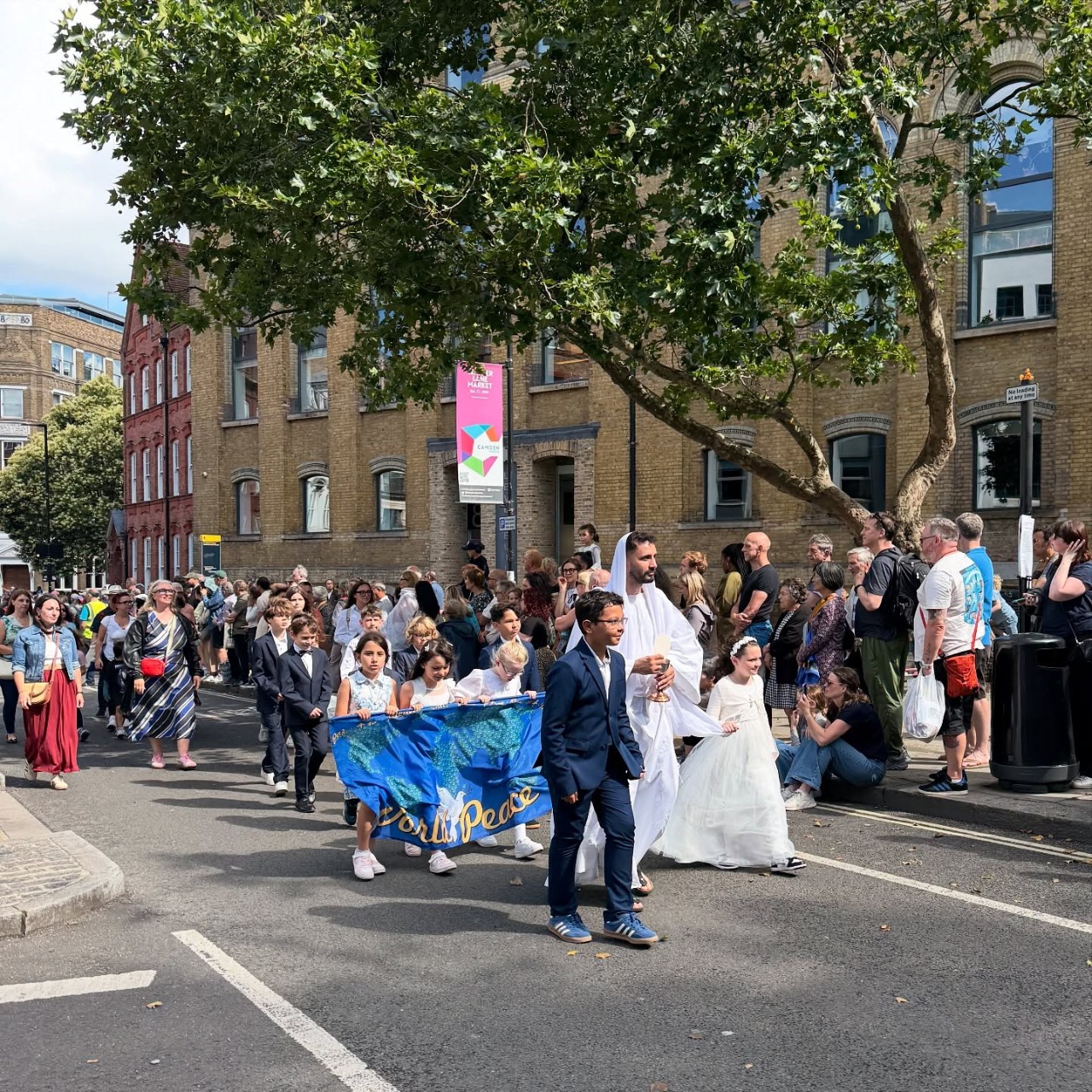
The community is also known for its cultural traditions, such as the annual feast of Our Lady of Mount Carmel and the festival held in July on Clerkenwell Road. “The Church continues to be an essential point of reference for first-, second- and third-generation Italians in London, remaining open and welcoming to all cultures and every spiritual, human and social need.”


