
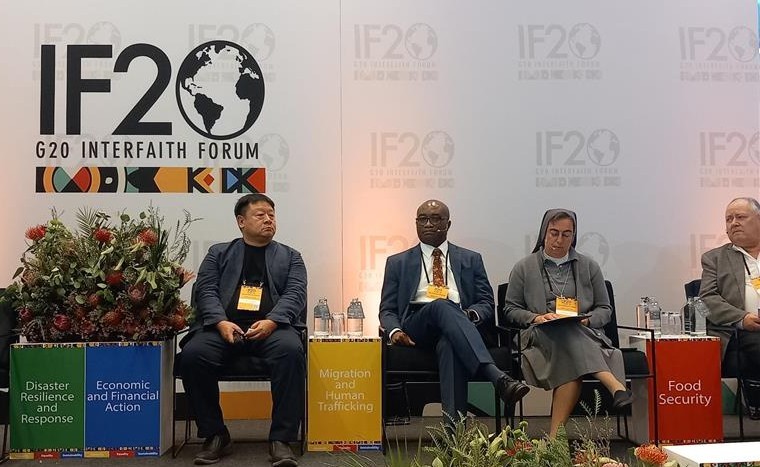
The G20 Interfaith Forum (IF20) took place in Cape Town, South Africa, from 10 to 14 August, under the theme “Ubuntu in Action: Focus on Vulnerable Communities”. The theme is inspired by this year’s G20 motto: “Solidarity, Equality, Sustainability,” which will be held in Gauteng (South Africa) on 22 and 23 November.
The Forum is a space for encounter and dialogue between different religious and related communities in which, through the transformative potential of religions and the work of faith- inspired actors, common priorities can be identified, and solutions mobilised to address global challenges.
The meetings addressed five topics for dialogue and reflection: food security and poverty; economic and financial action; addressing interreligious tensions through education and enhancing understanding of religious matters; migration and refugees, movements, human trafficking, and modern slavery; disaster prevention, response, recovery.
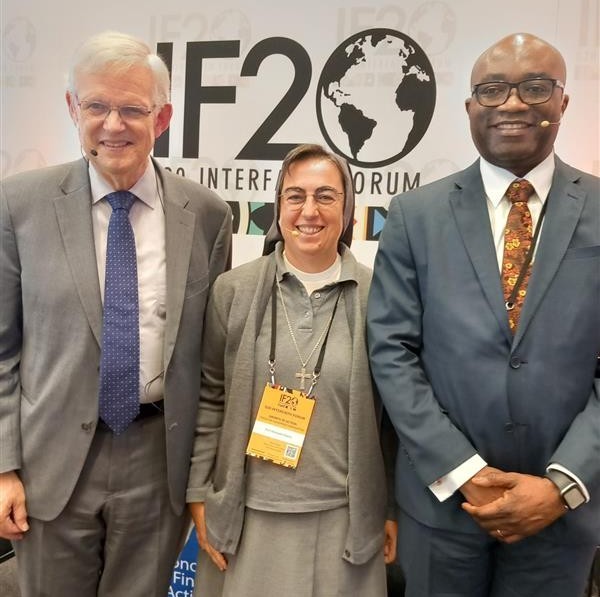
On this last point, Sr. Alessandra Smerilli, Secretary of the Dicastery for Promoting Integral Human Development (DPIHD), spoke at the plenary session on “Sustainability: Religious Responsibilities and Action.”
In particular, she emphasized that climate change is not just an environmental issue, but a profound social, economic, and ethical challenge. Inextricably linked to the plight of migrants and refugees, “climate change acts as a threat multiplier, exacerbating pre-existing vulnerabilities and inequalities in communities already facing poverty, conflict, and lack of resources.”
The Secretary of the DPIHD therefore recalled the encyclical Laudato Si’, which highlights the interconnection between the climate crisis and the social crisis, and calls for a model of integral ecology. Its concrete manifestation, she explained, is the Borgo Laudato Si’ project, which integrates “climate action, social justice, and spiritual reflection,” and points the way toward “a future in which human flourishing and ecological integrity are mutually reinforcing.”
We often make the mistake, the Salesian nun reminds us, of viewing people in difficulty, the most disadvantaged, as a problem, instead of recognizing their intrinsic dignity as human beings created in God’s image. As integral members of the human family, they deserve compassion and solidarity, in line with the Ubuntu philosophy, which inspired the theme of the event.
The term ‘Ubuntu’ comes from the Bantu language and means ‘humanity towards others’, promoting the value of compassion and mutual aid in human relationships. In keeping with that philosophy, the IF20 “recognizes that neither individuals nor nations can thrive in isolation, and that global priorities should ensure that no one is left behind.” Its mandate is therefore to contribute to a more just world and a sustainable future, as stated in the event’s concept note.
Equally significant was the intervention of Bishop Sipuka. The President of the South African Council of Churches warned against “devastating wars fought in the name of religion,” and invoked interfaith cooperation in food security, economic justice, education, migration, and climate action, quoting an African proverb: “If you want to go fast, go alone. If you want to go far, go together.”
His final appeal was for an “Ubuntu Covenant” — a shared pledge among faiths to embody transparency, service to the marginalised, accountability, prophetic courage, and systemic transformation. “The world is waiting, the poor are watching, and God is calling,” he concluded.