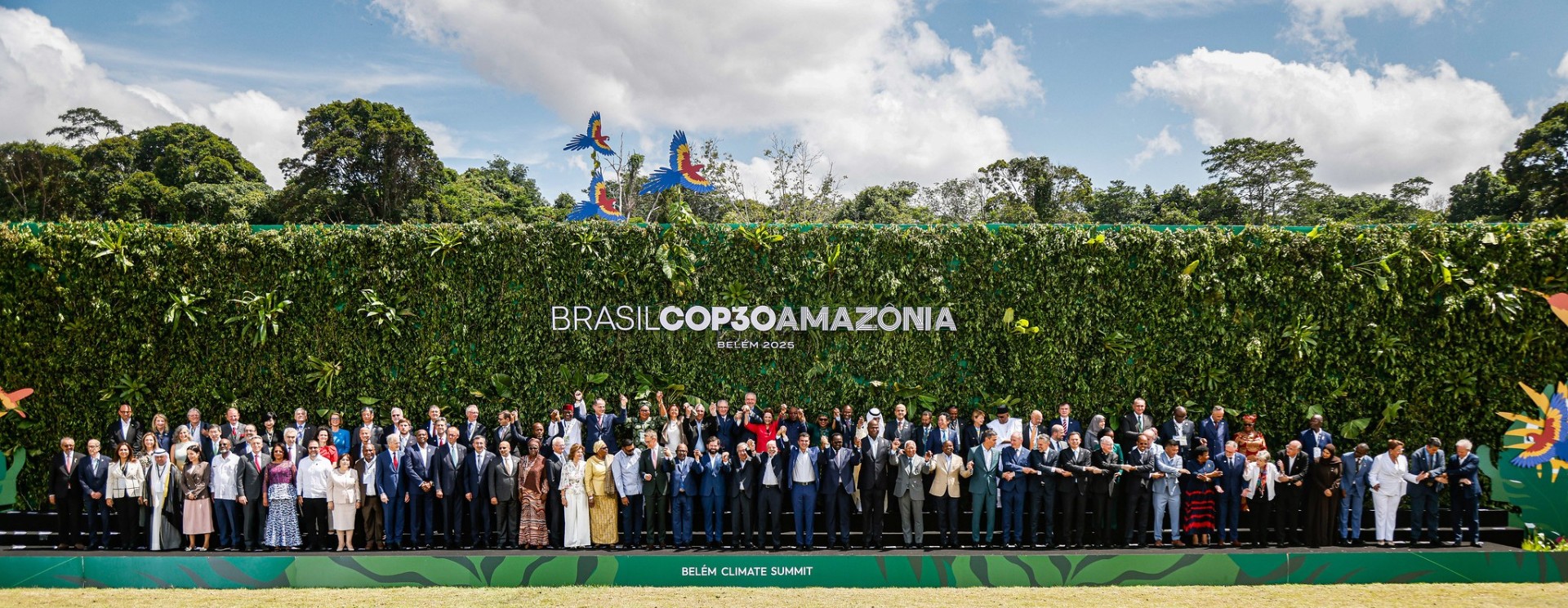
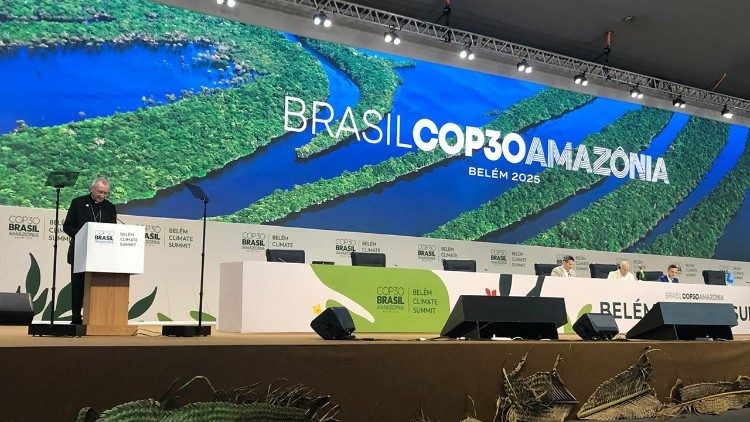
From 10 to 21 November 2025, COP30 took place in Belém, Brazil, a decisive milestone for global climate action and international cooperation. This meeting became a laboratory of alliances among generations, peoples, governments, and cultures, promoting an integral ecological conversion that places human dignity and social justice at the center.
Belém offers the opportunity to move from rhetoric to action, renewing a “bottom-up” multilateralism, inclusive, participatory, and rooted in communities, oriented toward the common good. Ten years after the Paris Agreement, COP30 stands as a test for the effectiveness of global climate governance and the real implementation of financial and legislative commitments.
“The path to achieving the goals set out in that Agreement remains long and complex”, said Pope Leo XIV at the “Climate Summit” ahead of COP30. In the same speech, delivered by Cardinal Secretary of State Pietro Parolin, the Pope's words encourage us to “courageously accelerate the implementation of the Paris Agreement and the United Nations Framework Convention on Climate Change”.
The financial dimension remains crucial. The international financial architecture must be reformed so that finance becomes a tool for justice rather than profit, supporting adaptation and energy transition in the most vulnerable regions. The new Collective Quantified Goal (NCQG), which sets a minimum of 300 billion dollars per year by 2035, represents progress but remains insufficient compared to the 2.4 trillion needed annually by emerging and developing economies. This imbalance highlights how every investment should become an expression of shared responsibility and genuine multilateral cooperation.
A “just transition” (also noted in COP30- Catholic Actors’ Reccomendations, cap.8) is a fair and inclusive process that reduces rather than amplifies existing inequalities. The climate crisis is first and foremost a human and social issue. True ecological conversion calls for a transformation of lifestyles, economic choices, and production models, guided by ethical determination and moral courage.
Across continents, in the various territories and communities, a vital fabric of “bottom-up” multilateralism is clearly visible, made concrete by numerous projects;
In Latin America, initiatives such as the Campaign for Divestment from Mining (Red Iglesia y Minería in Peru, Brazil, and Argentina) and Rowing Against the Current for Water, Life and Sovereignty (Red Justicia y Paz, Argentina and Paraguay) mobilize faith communities to defend water, land, and indigenous rights against destructive extractivism.
In Africa, Caritas Mali’s Climate Adaptation and Food Security Project promotes resilient agriculture through drought-resistant seeds, soil conservation, and training in climate-smart irrigation.
In Europe, the Austrian “Gold and Church” campaign challenges the social and ecological cost of gold extraction, encouraging ethical consumption and an ecological conversion of Church and society.
Across Asia and Oceania, local Churches innovate through waste recycling in Indonesia’s Diocese of Bandung and by transforming displaced faith communities in the Philippines into “Ecological Base Communities” through the work of the Jesuit Refugee Service and the Diocese of Iligan.
These examples embody the spirit of a renewed multilateralism rooted in solidarity and community action, showing that climate justice begins locally yet speaks a universal language.
Therefore, revitalizing multilateralism means strengthening international cooperation while recognizing the contribution of local communities, Churches, and civil society, which already offer concrete solutions for adaptation and environmental innovation. In fact, COPs do not only appeal to states, from which courageous responses and actions are also expected, but recognize and encourage the leading role of local communities, which are called upon to work together to build a more sustainable future for all.
Pope Leo XIV, in his speech on the tenth anniversary of the Encyclical Laudato Si', asked everyone a fundamental question:
“God will ask us if we have cultivated and cared for this world that He created (cf. Gen 2:15), for the benefit of all and for future generations, and if we have taken care of our brothers and sisters (cf. Gen 4:9; Jn 13:34).” The answer depends on each one of us.